
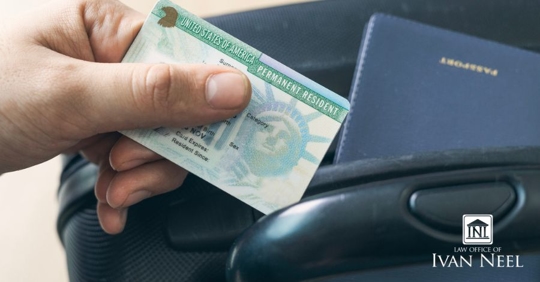
Navigating the U.S. immigration system can feel daunting, especially when your goal is to reunite with a loved one. For Texas residents hoping to sponsor a family member for a Green Card (lawful permanent residence), understanding the process is the crucial first step. We understand the importance of family, and this guide is designed to provide a clear and reassuring roadmap to help you reunite with your loved one.
Who Can You Sponsor?
The ability to sponsor a relative largely depends on your relationship to them and your own immigration status. As a U.S. Citizen or a lawful permanent resident (also known as a Green Card holder), you can generally sponsor family members:
U.S. Citizens can sponsor:
- Spouses, parents, and unmarried children under 21 (Immediate Relatives – always a visa available).
- Unmarried children over 21, married children, and siblings (Family Preference Categories – subject to annual limits and wait times).
Lawful Permanent Residents (Green Card holders) can sponsor:
- Spouses and unmarried children.
Important Note: The law does not currently allow you to sponsor grandparents, cousins, aunts, or uncles for a family-based Green Card.
The Two-Step Process
Sponsoring a family member typically involves two main stages, beginning with establishing the relationship:
Step 1: Filing the Petition
The process starts when you, the sponsor, file Form I-130, Petition for Alien Relative, with U.S. Citizenship and Immigration Services (USCIS). This petition proves that a valid family relationship exists.
- What you need: Documentation proving your relationship (like a marriage or birth certificate), evidence of your own status (passport, Green Card, etc.), and the required filing fee.
- What happens next: Once USCIS approves your I-130, your relative is considered a "beneficiary."
Step 2: Applying for the Green Card
The next step depends on where your family member is and whether a visa is immediately available (especially relevant for those in the Family Preference Categories):
- Adjustment of Status (AOS): If your relative is already in the U.S. legally and a visa is available, they will generally file Form I-485, Application to Register Permanent Residence or Adjust Status, with USCIS.
- Consular Processing: If your relative is outside the U.S., the approved petition is sent to the National Visa Center (NVC), and they will attend an interview, usually done at a U.S. Embassy or Consulate in their home country. This is often the path for Texas residents reuniting with family abroad.
The Financial Responsibility
As the sponsor, you must sign Form I-864, Affidavit of Support. This is a legally binding contract, in which you promise to provide financial support to your relative and demonstrate that you can maintain an income at or above 125% of the Federal Poverty Guidelines for your household size. This is to ensure the sponsored relative does not become a financial burden on the U.S. government.
Texas Connection: Seek Local Expertise
The Green Card process is uniform across the country, but having an experienced legal partner who understands the complexities and timelines is invaluable. For Texas residents, working with local immigration counsel ensures you're prepared for any specific regional requirements or processing norms. Don't go it alone!
Let Us Help You Reunite Your Family
This complex journey requires precision. Ensure your forms are correctly filed, your evidence is strong, and you meet every deadline. If you're a Texas resident ready to take the next step in sponsoring your family member, the supportive team at Law Office of Ivan Neel is here. Our team is here to help you reunite with loved ones through family-based immigration and guide you through every stage.
Call us today at (832) 447-6748 for professional, reassuring assistance with your immigration case.